


Page 55 - Risk Report 2024
P. 55
IRMSA
           55
                   RISK REPORT 2024/25


               Consequences of a national grid collapse could include the following:
               •   Communications network interruptions within 4 hours (voice, data).
               •   No access to cash or EFT channels when networks are down.
               •   Critical infrastructure/service failures when back-up power runs out.
               •   Water supply interruption (potable water, and operational water for use in power stations, data centres).
               •   Business and supply chain interruptions, loss of stock and revenue.
               •   Fuel shortages as storage at refineries and ports is depleted.
               •   Social unrest and increased syndicate operations.

               High levels of loadshedding (as Eskom balances the demand and supply of electricity), with commensurate
               impacts on households and organisations (business interruptions, business closure, unemployment,
               and increased debt) have improved recently due to increased maintenance by Eskom and the uptake of
               solar power reducing demand from the grid. Municipal load reduction resulting from inter alia insufficient
               maintenance,  loadshedding, and heightened crime, will continue to have revenue consequences for the
               municipalities themselves, small businesses without back-up capacity, and communities.

               Long-term sustainability of fuel energy supply is affected by demand and impacted by national policy decisions
               (e.g. closure of local refineries, demand and manufacturing of cleaner fuels, greenhouse gas management
               via carbon taxes and carbon budgets, environmental legislation compliance relating to minimum emission
               standards, waste management, and water use licences, and planning and management of energy supply).
               All of these are reliant on global imports, and are vulnerable to fluctuations in global markets, international
               supply chain disruptions due to geopolitical conflicts, theft from oil and gas pipelines, and syndicate driven
               operations leading to product shortages. In the medium-term, disruption of major energy-centric industries
               (manufacturing, mining, construction, etc.) may lead to declining investor confidence, negative sentiments
               of rating agencies, currency devaluation, and secondary impacts like decreased tourism and divestment.


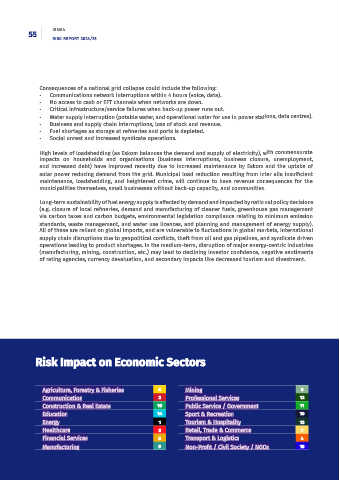
             Risk Impact on Economic Sectors


                Agriculture, Forestry & Fisheries        6        Mining                                  8
                Communication                            2        Professional Services                   12
                Construction & Real Estate              10        Public Service / Government             11
                Education                               14        Sport & Recreation                      16
                Energy                                   1        Tourism & Hospitality                   13
                Healthcare                               3        Retail, Trade & Commerce                 7
                Financial Services                       5        Transport & Logistics                   4
                Manufacturing                            9        Non-Profit / Civil Society / NGOs       15

